 ultimate-guide
Real Estate Investment Properties: Nashville Market Guide
Table of Contents
- Current Market Trends for Real Estate Investment Properties
- Why Real Estate Investment Properties Matter in This Market
- Short-Term Rental Regulations and Zoning Requirements
- Rental Property ROI Analysis and Cash Flow Modeling
- Multi-Family Properties for Sale and Portfolio Building
- Neighborhoods with High Appreciation Potential
- Financing, Tax Benefits, and Exit Strategy Planning
- Property Management and Tenant Screening Essentials
- Frequently Asked Questions
Last Updated: September 29, 2026
Current Market Trends for Real Estate Investment Properties
The Nashville real estate market continues to attract investors seeking both appreciation and cash flow opportunities. Market conditions shift rapidly, and understanding current trends is essential before committing capital to real estate investment properties. Over the past few years, the region has experienced consistent demand from both owner-occupants and investors, driven by population growth, job creation, and limited housing inventory in key neighborhoods.
Interest rates, housing supply, and rental demand directly impact returns on real estate investment properties. Local zoning changes, particularly around short-term rental regulations, have reshaped investment strategies. The competitive landscape means that successful investors must move quickly on off-market deals and understand neighborhood-specific dynamics rather than applying generic national formulas.
According to recent data from the National Association of Realtors, metropolitan areas with strong job growth and limited new construction tend to see sustained appreciation. This applies directly to Nashville, where tech, healthcare, and entertainment sectors continue expanding. Investors who focus on neighborhoods experiencing urban development and infrastructure improvements position themselves for long-term equity growth.
Why Real Estate Investment Properties Matter in This Market
Real estate investment properties serve as a wealth-building tool through multiple income streams: monthly rental cash flow, property appreciation, tax benefits, and use. Unlike stocks or bonds, real estate allows you to control an asset, improve it, and directly influence its returns. The Nashville market offers particular advantages because of its relative affordability compared to coastal metros, combined with strong rental demand.
Building a real estate portfolio in this market creates passive income that compounds over time. Many investors use rental income to cover mortgage payments, property management costs, and maintenance, while equity builds automatically. The use inherent in real estate, borrowing to purchase an asset worth more than your down payment, amplifies returns when properties appreciate.
Tax benefits for real estate investors include depreciation deductions, mortgage interest deductions, and the ability to defer capital gains through 1031 exchanges. These advantages don't exist with other investment types. We guide investors through structuring purchases to maximize these benefits while maintaining compliance with local regulations.
Short-Term Rental Regulations and Zoning Requirements
Short-term rental regulations have become a critical factor in real estate investment properties strategy. Nashville's zoning code restricts short-term rentals in certain neighborhoods and requires permits in others. Before purchasing any property with STR intent, verify current regulations with the local planning department, as rules change frequently and violations can result in fines or forced conversion to long-term rental.
The city requires a short-term rental license for properties rented fewer than 30 days. Owner-occupied properties in certain zones may qualify for exemptions, while non-owner-occupied properties face stricter requirements and may be prohibited entirely in residential zones. Zoning classification determines what's permissible, commercial zones allow broader STR use, while residential zones typically restrict or prohibit them.
Property management responsibilities increase with STR regulations. Noise complaints, parking violations, and neighbor relations become liability concerns. Many investors hire professional property management companies to handle licensing compliance, guest screening, and local rule adherence. The operational complexity and regulatory risk often make long-term rentals more predictable for newer investors.
Before purchasing real estate investment properties for STR conversion, consult local zoning maps and speak directly with the planning department.
Rental Property ROI Analysis and Cash Flow Modeling
Calculating Cap Rate and Gross Yield
Cap rate (capitalization rate) is a fundamental metric for evaluating real estate investment properties. It represents the annual net operating income divided by the purchase price. A property with $50,000 annual net operating income purchased for $500,000 has a 10% cap rate. Cap rates vary by neighborhood, property type, and market conditions, higher cap rates typically indicate higher risk or lower-demand areas.
Debt Service Coverage Ratio and Vacancy Planning
Debt service coverage ratio (DSCR) measures whether rental income covers mortgage payments and operating expenses. Lenders typically require a DSCR of 1.2 or higher, meaning annual net operating income must be 20% higher than annual debt service. A property generating $50,000 net operating income with $40,000 annual mortgage payments has a 1.25 DSCR, acceptable to most lenders.
Multi-Family Properties for Sale and Portfolio Building
Multi-family properties, duplexes, triplexes, and apartment buildings, offer advantages for portfolio building. A duplex generates two rental streams from one property, reducing the impact of single-unit vacancy. Larger multi-family buildings benefit from economies of scale in property management and maintenance.
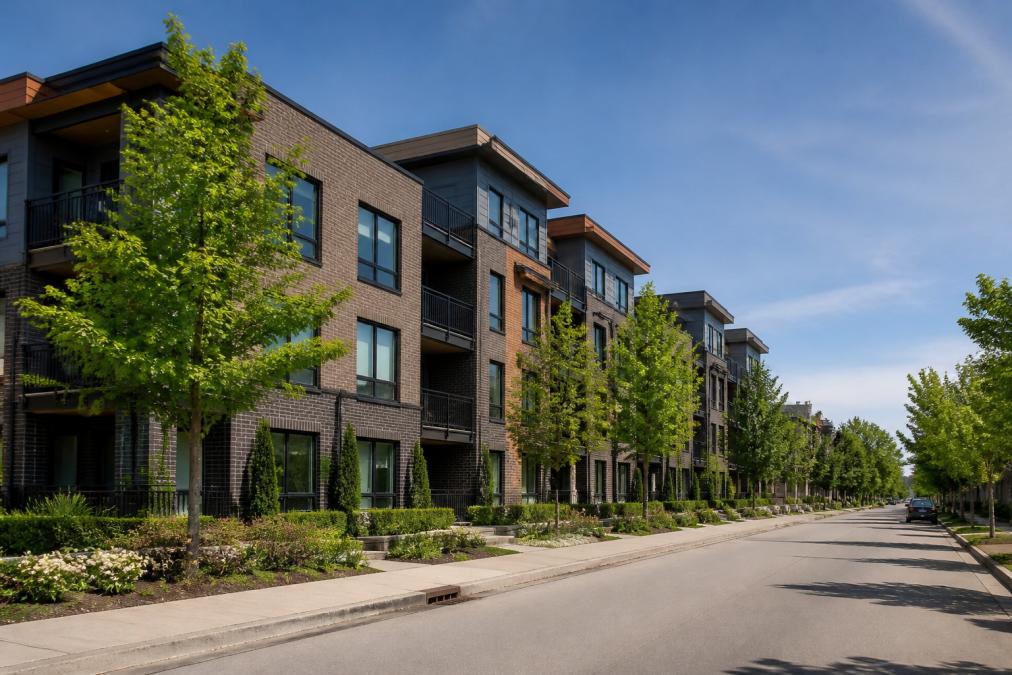
Neighborhoods with High Appreciation Potential
Neighborhoods experiencing urban development, job growth, and infrastructure improvements typically see sustained appreciation. Areas with new commercial development, improved transportation, or rising median household income attract both owner-occupants and investors, driving demand and prices upward.
Financing, Tax Benefits, and Exit Strategy Planning
Using 1031 Exchanges and Closing Costs
A 1031 exchange allows investors to defer capital gains taxes when selling one real estate investment property and purchasing another of equal or greater value. This strategy enables portfolio growth without immediate tax liability. The process requires strict timing, identification of replacement property within 45 days and closing within 180 days of the original sale.
Building Your Real Estate Portfolio Long-Term
Successful real estate portfolios are built incrementally through multiple purchases over years or decades. Each property purchase builds equity and generates cash flow that funds subsequent purchases. This compounding effect creates substantial wealth over time.
Property Management and Tenant Screening Essentials
Professional property management handles tenant screening, rent collection, maintenance coordination, and legal compliance (About NARPM®). Management fees typically range from 8-12% of monthly rental income but save time and reduce costly mistakes. For investors with multiple properties or limited local presence, professional management becomes essential.
| Management Task | Owner-Managed | Professional Management |
|---|---|---|
| Tenant screening | Time-intensive, error-prone | Systematic, reduced risk |
| Rent collection | Inconsistent, relationship strain | Reliable, professional enforcement |
| Maintenance coordination | Reactive, delayed repairs | Preventive, vendor relationships |
| Legal compliance | Risk of violations | Regulatory expertise |
| Time commitment | 5-15 hours monthly per property | Minimal owner involvement |
Frequently Asked Questions
Is it still a good time to invest in real estate investment properties?
Market timing depends on your investment strategy and timeline. The current market shows steady rental demand and housing inventory constraints that support appreciation potential. Cap rates and cash flow opportunities vary by neighborhood and property type. Focus on neighborhoods with strong employment growth and limited new construction. Work with a professional to analyze specific properties and neighborhoods rather than trying to time the overall market.
What are the regulations for short-term rental regulations in this area?
Short-term rental regulations vary significantly by jurisdiction. Most municipalities require permits, owner-occupancy rules, or minimum stay requirements. Some areas restrict STR licenses by neighborhood or cap the number of active listings. Zoning regulations may prohibit short-term rentals in residential-only districts. Tax obligations include collecting and remitting occupancy taxes. Verify current local ordinances and licensing requirements before purchasing any property intended for short-term rental income.
How do I calculate rental property ROI analysis for an investment?
Start with cap rate: (Net Operating Income ÷ Property Purchase Price) × 100. Calculate gross yield: (Gross Annual Rental Income ÷ Property Purchase Price) × 100. Subtract operating expenses (property management, maintenance, insurance, taxes, vacancy loss) from gross income to get NOI. Model cash flow by subtracting debt service (mortgage payments) from NOI. Track equity buildup from mortgage paydown plus property appreciation. Use these metrics to compare properties and ensure positive cash flow before purchase.
What are the best neighborhoods for rental property growth?
Look for areas with strong employment centers, population growth, limited housing inventory, and active urban development. Neighborhoods attracting young professionals, healthcare workers, and tech employees typically show consistent rental demand. Check median listing price trends, job growth rates, and new commercial development. Multi-family zoning and proximity to transit add value. Analyze neighborhood-specific vacancy rates and rental rates compared to purchase prices. Consult local market data and speak with experienced investors familiar with specific corridors.
Do I need a local real estate agent to buy investment property?
While not legally required, a local agent with investment property experience significantly improves your outcomes. Agents access off-market deals, understand zoning and rental regulations, negotiate terms, and connect you with property managers and contractors. They help analyze cash flow, identify neighborhoods with appreciation potential, and navigate financing options. A professional familiar with investment strategy and local market dynamics can help you avoid costly mistakes and identify high-yield opportunities aligned with your goals.
What financing options are available for real estate investment properties?
Conventional loans typically require 20-25% down payment and strong debt service coverage ratio documentation. Portfolio loans from banks may offer flexible terms for multiple properties. Hard money lenders provide fast funding for fix-and-flip strategies at higher rates. FHA loans work for primary residences but not investment properties. 1031 exchanges allow tax-deferred reinvestment of proceeds into like-kind properties. Cash purchases avoid financing costs but reduce leverage. Consult with a lender experienced in investment property financing to compare terms, rates, and qualification requirements.
How do multi-family properties compare to single-family rental investments?
Multi-family properties offer higher income potential, economies of scale in management, and diversified tenant risk across multiple units. Single-family rentals provide simpler management, stronger appreciation in desirable neighborhoods, and easier exit strategies. Multi-family typically requires larger capital investment and more complex financing. Single-family appeals to newer investors with smaller budgets. Both can deliver positive cash flow if properly analyzed. Your choice depends on capital available, management capacity, and portfolio goals. Consider starting with single-family while building toward multi-family expansion.